Discover how to become an Aqua Yoga teacher, what to look for in a certification program, and how you can begin sharing the benefits of yoga in water with your community.
Have you ever experienced the wonderful feeling of practicing yoga in warm water? Or perhaps you're already a yoga teacher, fitness instructor, or aquatic professional looking for a new way to support your students.
Becoming a certified Aqua Yoga instructor can open the door to a deeply rewarding teaching experience.
Aqua Yoga combines the ancient wisdom of yoga with the unique qualities of water, creating a practice that is gentle, accessible, and surprisingly powerful.
Whether you're an experienced yoga teacher or someone who simply loves being in the water, this guide will walk you through what Aqua Yoga is, how to become an instructor, and what to look for in a quality Aqua Yoga teacher training program.
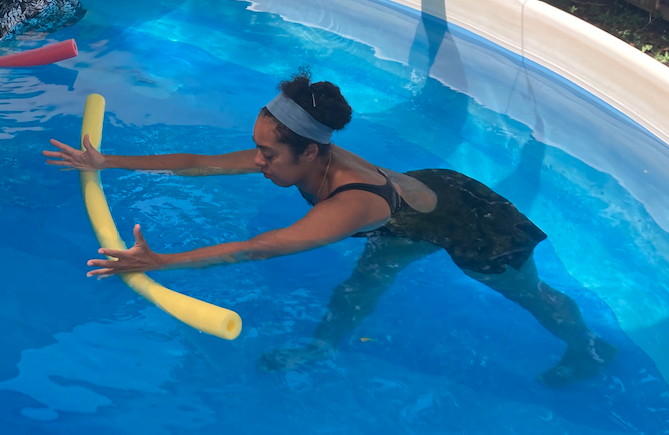
Parsvottanasana or Pyramid Pose mindfully practiced in water is excellent for relieving back pain and tension.
What Is Aqua Yoga?
Aqua Yoga is the practice of traditional yoga adapted for the aquatic environment, typically in a warm, chest-deep swimming pool.
Like traditional yoga, Aqua Yoga incorporates mindful movement, breathing practices, meditation, and relaxation. However, the water adds an entirely new dimension to the experience.
The buoyancy of water supports the body, reducing the effects of gravity and making many movements more accessible. Water also provides gentle resistance, creating opportunities to develop strength, stability, balance, and flexibility.
For many people, Aqua Yoga offers an opportunity to experience yoga in ways that may not be possible or comfortable on land.
Aqua Yoga can be especially welcoming for people experiencing:
Chronic back pain or joint discomfort
Arthritis or limited mobility
Balance challenges
Injury recovery or physical limitations
Larger bodies or discomfort in traditional yoga settings
Stress, anxiety, or difficulty relaxing
One of the beautiful things about Aqua Yoga is that participants don't need to be flexible, physically fit, or even know how to swim to participate in an appropriately designed, chest-deep-water class.
This makes Aqua Yoga an especially meaningful practice to teach.
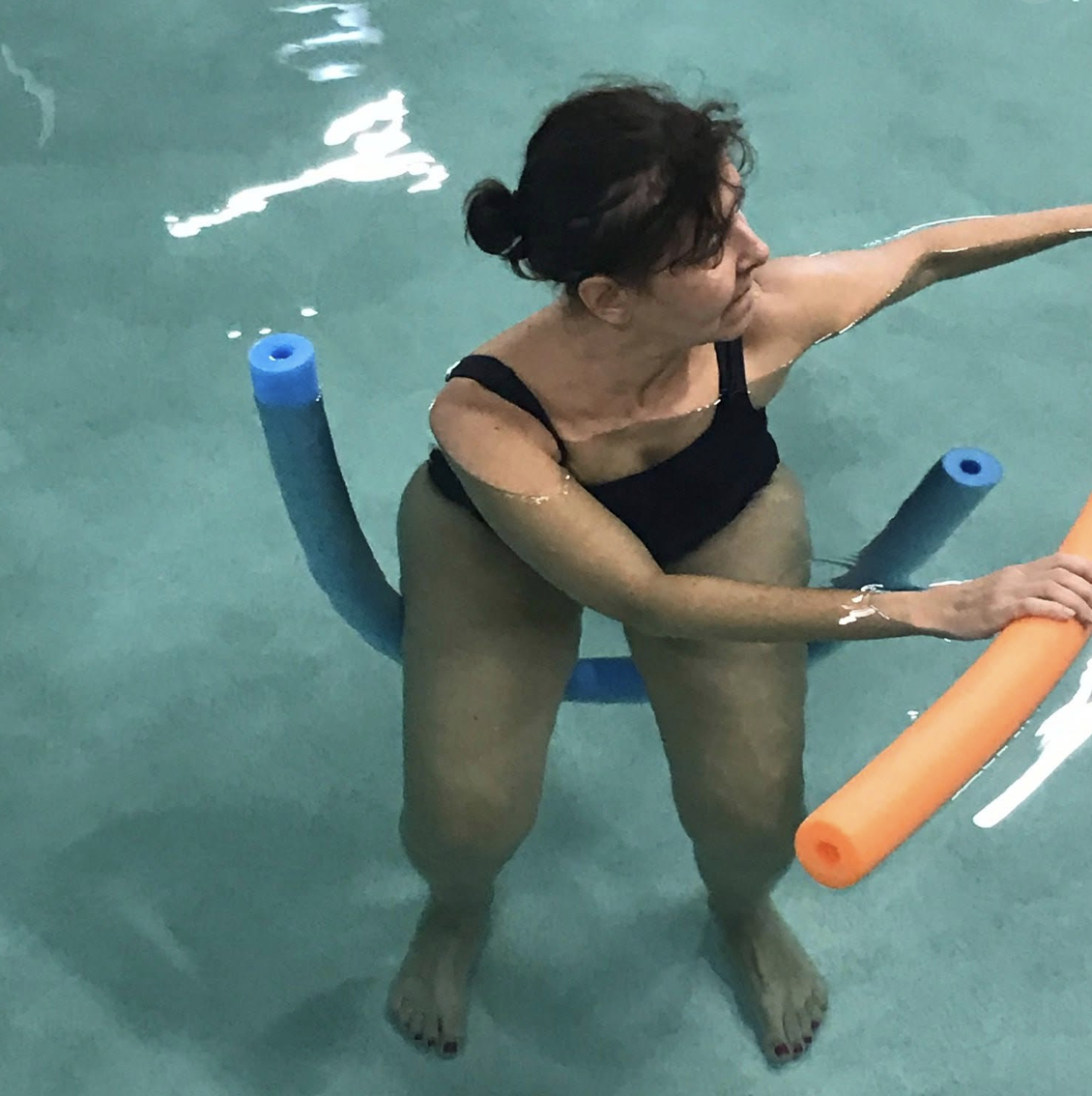
Aqua Yoga promotes self-awareness in body, breath and mind which sets it apart from other forms of aquatic exercise.
Why Become a Certified Aqua Yoga Instructor?
There is something incredibly rewarding about helping someone discover that movement can feel good again.
As an Aqua Yoga teacher, you may work with students who have avoided exercise because of pain, limited mobility, or a fear of injury. Others may simply be looking for a mindful, relaxing alternative to traditional fitness classes.
Aqua Yoga allows you to meet people where they are.
For existing yoga teachers, learning to teach in water expands your skills and gives you a new environment in which to share yoga.
For aquatic fitness instructors, Aqua Yoga offers an opportunity to incorporate mindfulness, breathwork, yoga philosophy, and nervous system regulation into your classes.
And for those who simply love Aqua Yoga, teacher training can be a wonderful way to deepen your understanding of the practice while exploring the possibility of sharing it with others.
You don't have to be an advanced yoga practitioner to begin learning how to teach Aqua Yoga. What matters is a willingness to learn, an appreciation for the benefits of water, and a genuine desire to support others.
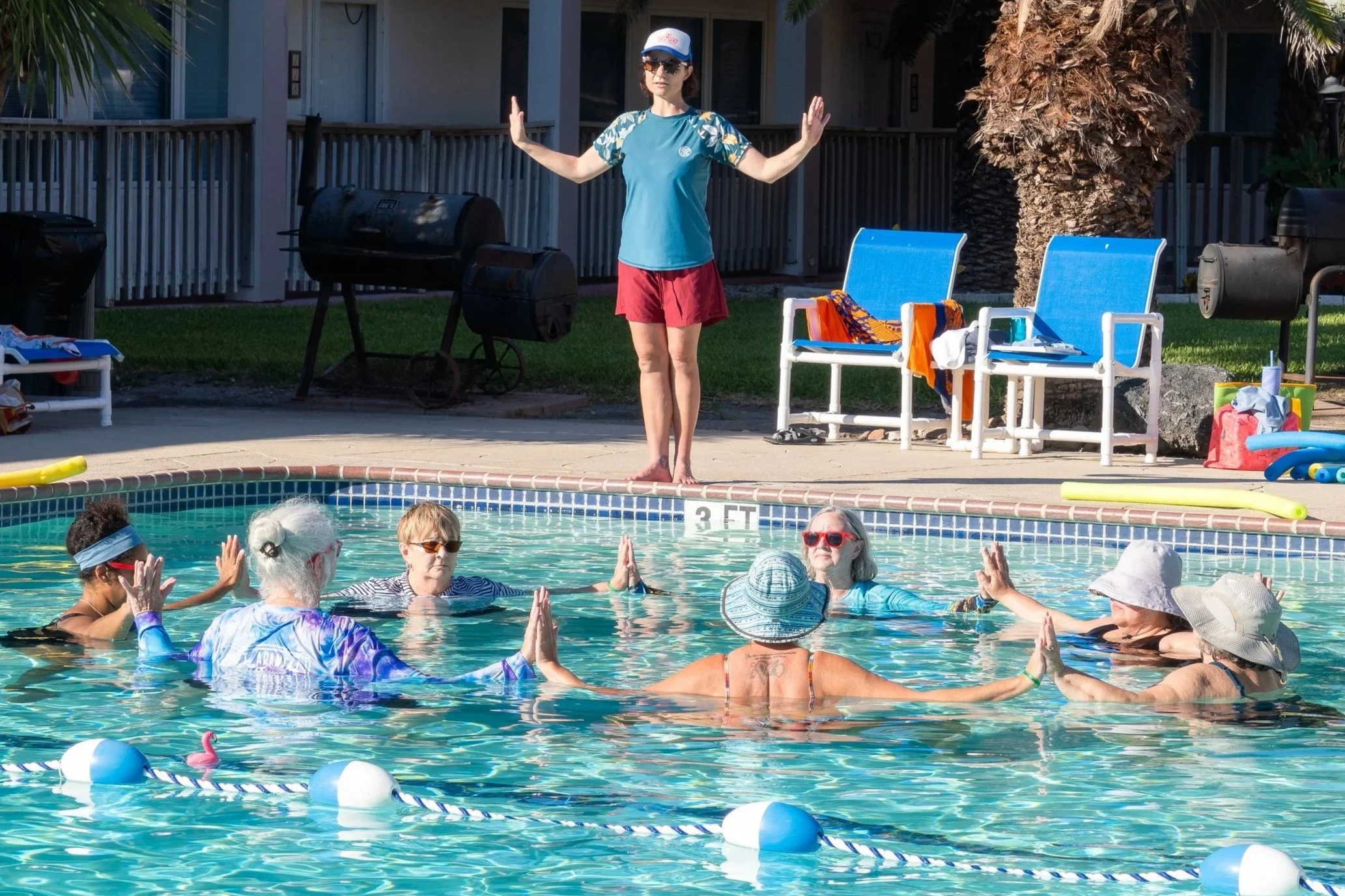
Aqua Yoga classes are inclusive and accepting community spaces.
Do You Need to Be a Yoga Teacher to Become an Aqua Yoga Instructor?
Not necessarily!
While a background in yoga, fitness, movement, or aquatic instruction can certainly be helpful, some Aqua Yoga teacher training programs welcome beginners who are passionate about learning.
Different certification programs have different prerequisites, so it's important to check their requirements before enrolling.
A good training should provide a foundation in the principles of yoga, safe movement, aquatic adaptations, and the practical skills needed to guide a class.
It's also important to understand that an Aqua Yoga certification is not necessarily equivalent to a comprehensive 200-hour yoga teacher training.
Becoming CPR and first aid certified is highly recommended whenever you are working with people and depending on where you plan to teach, employers, aquatic facilities, may require additional fitness certifications. Aquatic facilities are often in need of more classes and teachers and would love the opportunity to host Aqua Yoga classes. Inquire at your local pool as every facility has different requirements.
What Will You Learn in an Aqua Yoga Teacher Certification Program?
A comprehensive Aqua Yoga teacher training should teach you much more than a collection of poses.
To become a confident, effective instructor, you need to understand both the practice of yoga and how the aquatic environment changes the way we move, breathe, and experience our bodies.
Here are some important areas to look for in a quality training program.
1. Aqua Yoga Postures and Movement
Learn how traditional yoga postures can be adapted for the water, including standing postures, balance practices, stretches, strengthening movements, and gentle flowing sequences.
You'll also learn how water depth, buoyancy, and resistance influence movement.
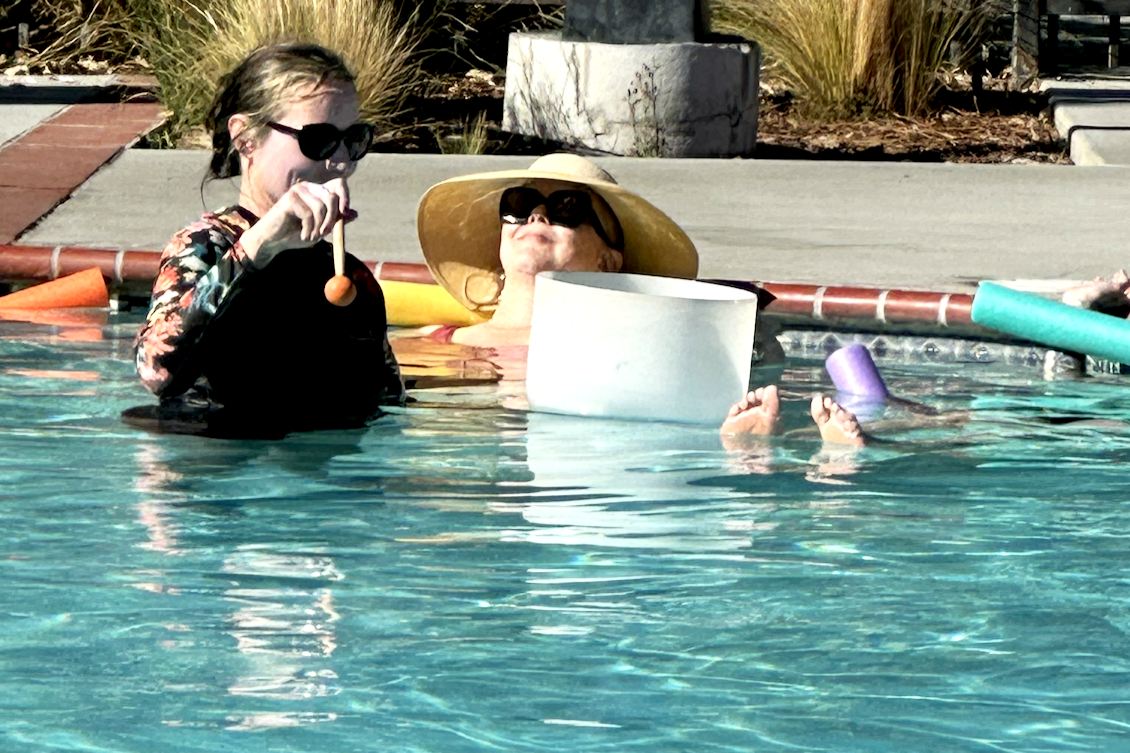
There are many ways to conclude an Aqua Yoga class. In warmer pools Aqua Savasana with a singing bowl is blissful!
2. Breathwork, Meditation, and Relaxation
Aqua Yoga is much more than aquatic exercise.
Breathing practices, meditation, and mindful awareness are essential elements that distinguish Aqua Yoga from many other forms of aquatic fitness.
Learning how to incorporate these practices can help your students develop a deeper connection with their bodies and experience greater relaxation.
3. Anatomy, Alignment, and Safe Movement
Understanding how the body moves is essential when teaching students with different physical abilities.
Training should introduce appropriate alignment principles, movement adaptations, and ways to create a supportive learning environment.
Aqua Yoga teachers should also understand their professional scope of practice and when a student may need guidance from a qualified healthcare professional.
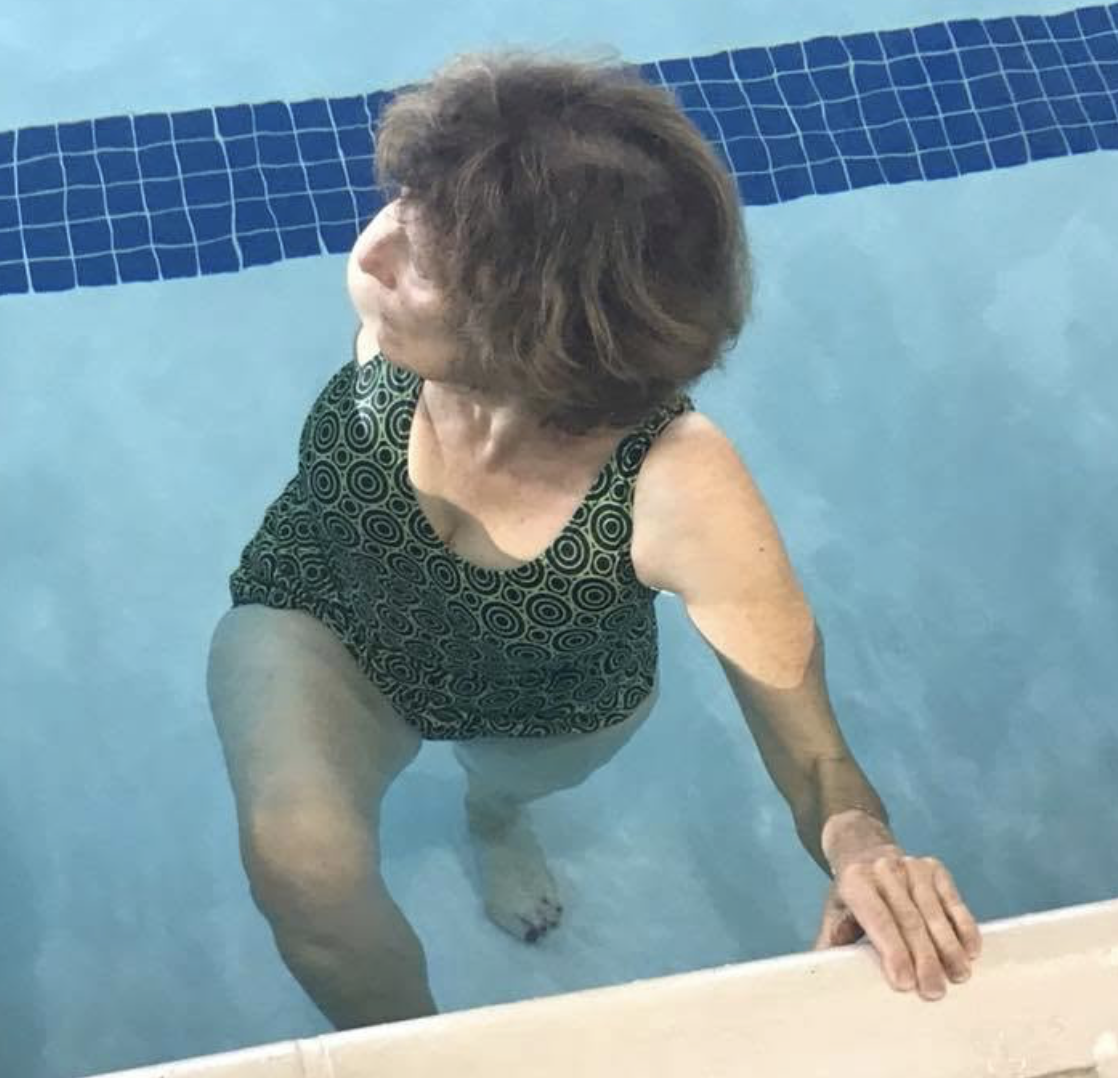
A compassionate and responsive attitude in addition to skillful alignment and core engagement is key to a healthy Aqua Yoga practice.
4. Class Sequencing and Teaching Skills
A well-designed Aqua Yoga class is more than a series of movements.
You'll want to learn how to create a balanced class that includes keeping people warm in addition to a warm-up, mindful movement, strengthening and stretching practices, and relaxation.
You'll also develop skills in verbal instruction, pacing, adapting movements, and helping students feel comfortable in the water.
5. Yoga Philosophy and Mindfulness
Yoga offers much more than physical movement.
The principles of mindfulness, compassion, non-harming (ahimsa), and self-awareness can become the foundation of a meaningful Aqua Yoga practice.
When these principles are integrated into teaching, Aqua Yoga becomes an opportunity to nurture both physical and emotional well-being.
Can You Become a Certified Aqua Yoga Instructor Online?
Yes! Online Aqua Yoga teacher training has made this specialized practice accessible to people who may not have an in-person training available in their area.
A thoughtfully designed online program can provide video instruction, guided Aqua Yoga classes, printable teaching materials, anatomy lessons, quizzes, and opportunities for independent practice.
One advantage of self-paced online training is the ability to revisit lessons and practice at your own speed.
However, it's important to choose a program that encourages actual practice in the water, rather than relying entirely on watching videos.
Teaching in water is a unique experience, and developing confidence requires putting what you've learned into practice.
Before enrolling, ask whether the program includes practical teaching guidance, assessments, and clear information about the certificate awarded.

Learn how to teach Aqua Yoga on your schedule.
Introducing Aqua Kriya Yoga Teacher Training
If you're interested in becoming an Aqua Yoga instructor, I'd love to introduce you to the Aqua Kriya Yoga Online Teacher Training.
I'm Katherine Winge, a senior Aqua Kriya Yoga teacher and teacher trainer. I've been teaching yoga on land and in water since 2011,, and I've witnessed firsthand how transformative this practice can be.
My own journey with Aqua Yoga grew out of my experience with significant back pain and injury. Practicing yoga in water gave me a way to reconnect with movement when traditional exercise was difficult.
That experience, combined with years of teaching and training, continues to shape how I share Aqua Yoga today.
My intention is to help teachers develop not only the practical skills to lead Aqua Yoga classes, but also a deeper understanding of yoga as a practice of mindfulness, compassion, and connection.
What Makes Aqua Kriya Yoga Teacher Training Unique?
Our online training brings together the physical, mental, and philosophical dimensions of yoga in a format designed for learning at your own pace.
Module 1: Foundations of Aqua Kriya Yoga includes:
20 lessons introducing the foundations of Aqua Kriya Yoga
Video instruction from an experienced Aqua Kriya Yoga teacher
Guided Aqua Yoga practices you can experience in your own pool
Downloadable audio practices and printable sequence sheets
Instruction in yoga philosophy, mindful movement, and teaching principles
How water effects the body
Gross and subtle anatomy
Quizzes and an open-book final examination
1-1 coaching
A certificate of completion upon successfully meeting the course requirements
The training is designed to give you a strong foundation in Aqua Kriya Yoga while helping you develop the confidence to begin sharing what you've learned.
Students have one year of access to the online course, with downloadable materials they can keep for future reference.
Additional advanced training is planned for those who wish to deepen their knowledge of sequencing, anatomy, and class development.
Explore the Online Aqua Kriya Yoga Teacher Training
Where Can Aqua Yoga Instructors Teach?
Depending on your qualifications, facility requirements, and local regulations, there are many potential places to offer Aqua Yoga classes.
These may include:
Community swimming pools and recreation centers
Yoga and wellness studios with pool access
Fitness centers and aquatic facilities
Retirement and senior living communities
Resorts and retreat centers
Private or small-group classes in suitable pools
Some teachers incorporate Aqua Yoga into an existing yoga or fitness business, while others create a dedicated Aqua Yoga offering.
One of the joys of this work is introducing people to a practice they may never have encountered before.
And because Aqua Yoga is still relatively specialized, there are many opportunities to bring it to communities where classes aren't currently available.
Frequently Asked Questions About Aqua Yoga Certification
How long does it take to become an Aqua Yoga instructor?
The length of training varies by program. Some courses offer short introductory certifications, while others provide more extensive study and practical training.
The Aqua Kriya Yoga Online Teacher Training Module 1 is organized into four weeks of self-paced learning, with lessons released progressively.
Do I need access to a swimming pool?
Having access to a suitable pool (chest-depth water, 85 F + tempourature) required so you can experience the movements, breathing practices, and sequences firsthand.
Practical experience in the water is an important part of becoming a confident Aqua Yoga teacher.
Do I need to know how to swim?
Many Aqua Yoga classes take place in chest-deep water, where participants can stand comfortably.
However, teaching requirements may differ from those for participating in a class. Instructors should be comfortable and safe in the aquatic environment and meet any swimming or water-safety requirements established by their training provider or teaching facility.
Is Aqua Yoga the same as water aerobics?
Although both take place in water, Aqua Yoga places particular emphasis on yoga postures, conscious breathing, mindfulness, and relaxation.
Rather than focusing primarily on cardiovascular exercise, Aqua Yoga invites participants to cultivate awareness and a more compassionate relationship with their bodies.
Can I teach Aqua Yoga after completing an online certification?
An online training can provide an important foundation for teaching, but the qualifications needed to teach professionally depend on the program, the facility, and local requirements.
Before offering classes, check what additional experience, insurance, safety training, or professional credentials may be required.
Begin Your Journey as an Aqua Yoga Teacher
Becoming an Aqua Yoga instructor is about more than learning to teach movements in water.
It's an opportunity to create a space where people feel supported, included, and empowered to connect with their bodies.
Whether you're a yoga teacher looking for new inspiration, an aquatic fitness professional wanting to bring more mindfulness into your classes, or someone who simply loves the practice, Aqua Yoga teacher training can be a meaningful next step.
The world needs more opportunities for accessible, compassionate movement. Perhaps you could be the person who brings Aqua Yoga to your community.
I'd love to support you on that journey.
Learn More About Aqua Kriya Yoga Online Teacher Training & Certification
With warmth,
Katherine Winge E-RYT, YACEP
Senior Aqua Kriya Yoga Teacher & Teacher Trainer, Certified yoga instructor, Yoga therapist, Meditation teacher, Swim instructor & Lifeguard.